How to Build Stronger Bones and Prevent Osteoporosis After 50
Osteoporosis is often called a silent disease because you usually don’t know it’s there until something happens. It can quietly steal your freedom, independence, and quality of life. You can feel healthy and think everything is fine, and then one fall — or sometimes even a small bump — can lead to a broken wrist, ankle, or even a vertebra.
About 10 million Americans have osteoporosis and another 44 million have low bone density. Doctors typically diagnose it with a DEXA scan, which measures whether a person has osteopenia or osteoporosis.
The only way to know for sure where your T-score stands is to have a DEXA scan. If your doctor has not ordered one yet, I recommend asking about it. If your numbers are good and you have not been lifting weights regularly, now is the perfect time to start. If your numbers show osteopenia, it is especially important to begin strengthening your bones now. And if you have osteoporosis, your doctor may recommend medication — but that doesn’t mean you get to sit back and do nothing. Medication can absolutely be part of the plan, but movement, nutrition, recovery, and lifestyle still matter.
Why am I so passionate about this?
Because I am a strong, healthy woman who lifts regularly, and I was surprised to learn that because of autoimmune disease and a history of chronically low vitamin D, I have osteopenia — the early stage of bone loss.
I’ve worked with women diagnosed with osteoporosis and have helped several of them, alongside medical support, improve their bone density over time. And now I am following the same plan I give my clients. I’ll keep you posted in a future blog on whether I’m able to improve my own osteopenia as well.
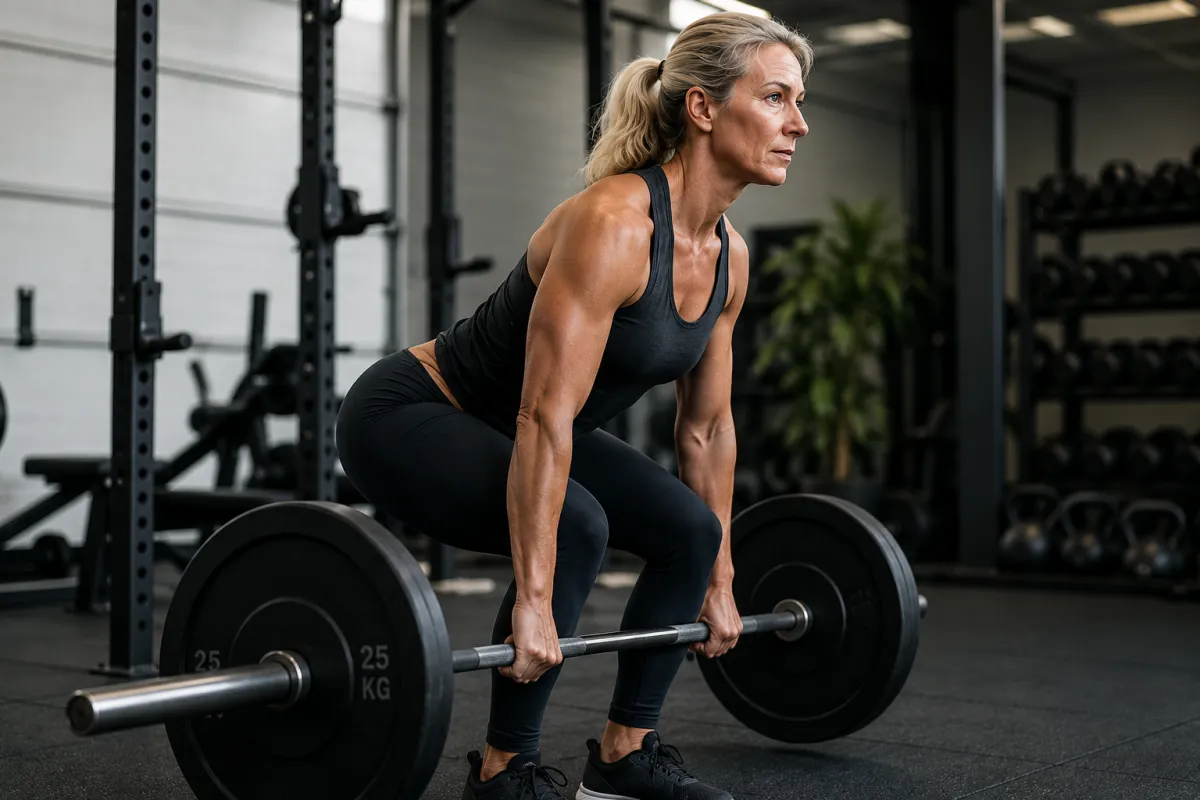
When it comes to osteoporosis and osteopenia, movement matters. Bones love to be challenged. That’s why strength training, impact work like jumping or hopping, and power training can be so helpful after 50. Research shows that women with low bone mass often benefit more from higher-intensity resistance and impact training than lighter exercise alone — especially when it’s done safely and with proper form. In other words, your bones need a reason to stay strong. Research on high-intensity resistance and impact training for bone density
And I have seen this play out in real life.
One of my clients recently shared this after her latest DEXA scan:
“Great call with the DEXA scan doctor. She said I’m doing amazing. 7% increase from this time last year. It is not just the medicine. She occasionally sees slight improvement with the medicine, but not to this degree.” — Betty
That matters because it reinforces something I deeply believe:
Medication may help support bone health, but the body still needs a reason to build and maintain strength.
I’ve seen women get stronger and feel better with a program that includes heavy lifting, power work, jump training, protein, recovery, sleep, and MELT. That combination can make a huge difference.
This is why I don’t just tell women to “exercise more.” I want them to move in a way that teaches the body how to carry load better. Heavy lifting helps build muscle. Jump training helps bones respond to impact. Power work helps you stay quick, strong, and capable. Together, these movement styles support stronger bones, better balance, and more confidence in your body.
I also think it is important to remember that bone health isn’t just about medication or one single exercise. It is about the whole system. The body has to be given the right kind of challenge over and over again so it knows to keep building instead of breaking down.
And yes — fascia matters too.
Fascia is your body’s connective tissue network. It connects you from skin to bone, head to toe, surrounding every muscle, joint, and organ in your body. It also plays a major role in how your body absorbs force, distributes load, moves efficiently, and communicates internally.
When fascia becomes dehydrated or restricted, movement patterns can become less efficient, compensation increases, and injury risk can go up. But when fascia is hydrated and healthy, your body moves better, recovers better, and responds better to strength training.
That is one reason I teach The MELT Method both as stand-alone sessions and inside my coaching programs. Helping women improve the quality of their movement is not separate from bone health — it is part of protecting it.
Because after 50, we’re not trying to become fragile.
We’re training for a longer, stronger, more resilient life.
If you’re ready to build strength, improve resilience, and support your body for the long haul, this is exactly the kind of work we do inside Strong After 50 Collective.
About Maria
Maria helps women 50+ lose weight, build muscle, improve energy and sleep, and reduce aches and pains so they can live active, healthy lives long term. Her work focuses on building muscle safely and keeping blood sugar steady.
