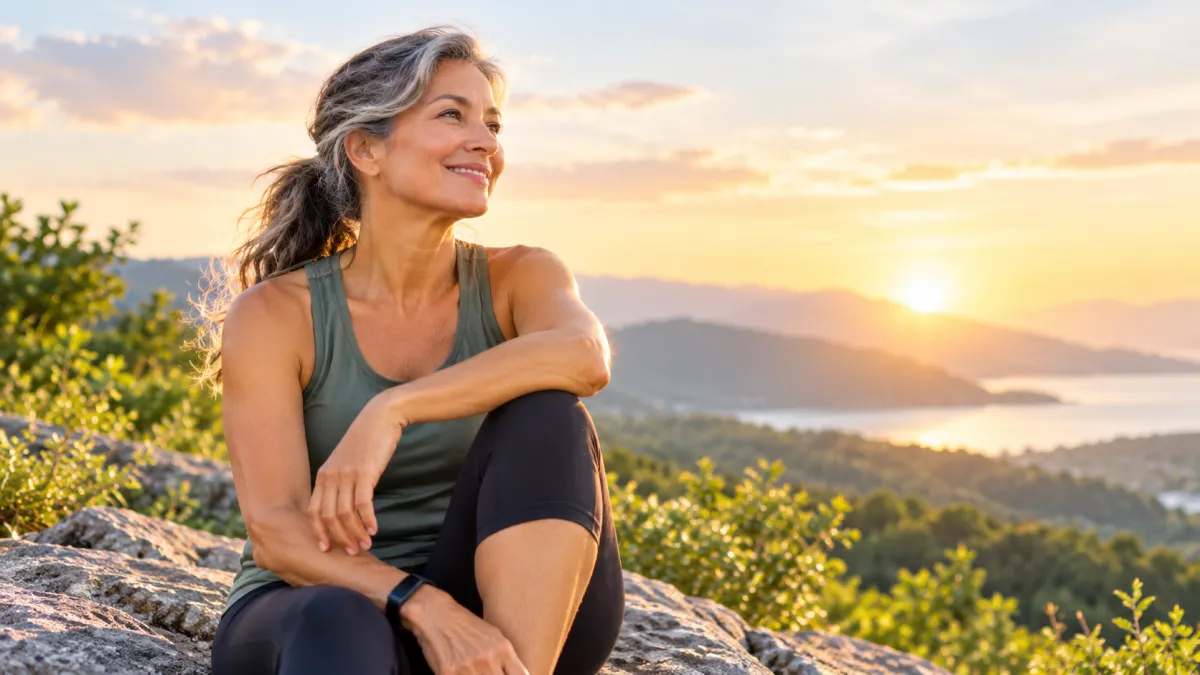
Why Getting Older Doesn’t Mean You Have to Feel Older: How to Age Well After 50
This topic has come up quite a bit lately, and I think it's something we need to talk about.
I know women in their 50s who laugh and say, “Oh well. It's just getting older.”
And then I know women in their late 70s, 80s and even early 90s who are still working on getting stronger, looking good in their clothes, staying active and doing everything they can to remain independent.
So what separates these women?
Why do some women decide they're going to put on their sweats, sit on the couch and give up on themselves, while other women who are 20 years their senior are still working at getting stronger and staying active?
Mindset.
Not because mindset can stop aging. It can't.
But because the way you think about aging influences what you believe is possible, what you continue to practice and how you respond to the changes happening in your body.
And mindset is usually where I start with my clients.
Your Mindset Matters More Than You Think as You Age
There's an underlying fear that can grab hold of us as we get older.
Crap. Half my life is over.
What's going to happen to me in 20 years?
What if I get sick?
What if I become frail?
What if my body starts failing me?
Those thoughts can snowball quickly.
And before you know it, you're not just thinking about getting older. You're worrying about everything that might happen because you're getting older.
Can I share my secret with you?
You have more power than you think.
You can't control your genetics. You can't control every diagnosis. You can't control every change that happens to your body.
But you can learn how to care for the body you have.
You can learn how to lift weights properly for the season of life you're in. You can choose foods that nourish your body. You can learn ways to care for your mind-body connection through breathwork, prayer and meditation. You can learn more about your nervous system, fascia and lymphatic system and find ways to better support your body.
And something starts to happen when you become the woman who takes better care of herself.
You become lighter, yet more grounded.
The stress and worry don't have to run the whole show.
You start trusting yourself more.
You start paying attention to what your body is telling you.
And instead of constantly asking, “What's going to happen to me?” you start asking, “What can I do with what I have today?”
That's a very different way to age.
One study of more than 14,000 adults over age 50 found that people who were more satisfied with the process of aging had a 43% lower risk of dying from any cause over the four-year study period compared with those who were least satisfied. The study also found associations with better cognitive functioning, more physical activity, less trouble sleeping, less loneliness and depression, and a greater sense of purpose.
That doesn't mean thinking positively magically prevents disease or makes us live longer. But it does point to something important: how we think about aging is connected to how we live.
And that's what really catches my attention.
When we care for our physical health, it can influence how we feel emotionally. When we feel better emotionally, we're often more willing to move, connect with people and care for ourselves.
This is why I don't believe we can separate the mind, body and spirit into three completely separate things.
Everything is connected.
Build Mitochondrial Health and Physical Resilience
You may have heard mitochondria called the “powerhouses” of your cells.
That's a simple way to think about them.
Mitochondria help your cells produce the energy they need to do their jobs. That energy matters when you're climbing stairs, carrying groceries, picking up your grandchildren, playing golf or pickleball, traveling or simply getting through your day with more stamina.
As we age, mitochondrial function can change. But here's the part I want you to remember:
Your body still responds to the demands you place on it.
Movement is one of those demands.
Research in older adults suggests that exercise can produce positive changes in muscle mitochondrial function, and both cardiovascular and resistance training have a role to play. This is one reason I don't want women over 50 thinking their workouts are only about burning calories.
Your body is adapting.
You're asking your muscles to work. You're asking your cardiovascular system to support you. You're asking your body to produce and use energy.
You're giving your body a reason to maintain and build capacity.
And that brings us to resilience.
I often think of muscle like a savings account.
You don't build muscle because you need to lift something heavy every day. You build it because you want something in reserve.
A trip where you're walking more than usual.
A flight of stairs.
A hike.
A fall you need to catch yourself from.
An illness that temporarily keeps you in bed.
An injury that requires rehabilitation.
Life is going to ask things of our bodies.
The goal isn't to avoid every challenge. It's to build a body with enough capacity to meet the challenges that come.
That's resilience.
And that's one reason strength training becomes so important as we age.
Support Your Gut and Metabolic Health
Want to feel healthy as you age?
Nothing can make you feel old quite like poor digestion, low energy or changes in your body that you don't feel good about.
And yes, our bodies change.
Hormones change. Medications can change things. Our metabolism changes. Our activity levels can change. Genetics play a role.
But that doesn't mean we're powerless.
We can build habits that support how we digest food, use energy, maintain muscle and recover.
This doesn't require a perfect diet.
It starts with the basics: enough protein, gradually increasing fiber, a variety of plants, mostly minimally processed foods, regular movement, consistent strength training, adequate sleep and ways to manage and adapt to stress.
I also want you to pay attention to hydration. One of the simplest things you can do is start your day with a glass of water. Then keep water nearby and sip it throughout the day instead of waiting until you're extremely thirsty.
A general reference point for women over 50 is around 9 cups of fluids a day, although individual needs vary based on things like activity, climate, food intake and health.
These things aren't sexy. They're not the newest health hack.
But they're foundational.
And when you consistently give your body what it needs, you create a more supportive environment for your gut and metabolic health.
We're not just trying to “fix digestion” or change a number on the scale.
We're supporting the woman who wants to wake up feeling good, have energy for her day, enjoy her meals and keep doing the things she loves.
Protect Your Mobility and Support Your Body's Natural Recovery Systems
This one is huge for me.
Because mobility is freedom.
When you can move easily, the world feels bigger.
You can get on the floor and get back up. You can reach overhead. You can turn your head when you're driving. You can get in and out of a car. You can walk through an airport. You can travel. You can play with your grandchildren.
You can keep doing the things that make your life yours.
And when you're hurting all the time, your world can start to feel smaller.
That's why helping women move with more ease has been such a big part of my work for the last 25 years.
There are several ways I want you to think about caring for your mobility and recovery.
Move throughout your day. Not just formal exercise. Get up from your desk. Take a walk. Change positions. Move your joints. Look for opportunities to keep your body from being in the same position for hours at a time.
Take care of your fascia. I've been teaching MELT since 2013, and I don't go a day without caring for my own body in this way. After my serious bike accident in 2021, I became even more aware of how important it is for me to pay attention to my body and how it feels. MELT is one of the tools I use to do that.
Pay attention to your lymphatic system. Your lymphatic system is part of your immune system and helps move fluid through your body. Movement supports lymph flow, but there are other practices you can incorporate as well. Dry brushing is one practice I use, and I also use the MELT Fascia Hydrator as part of my own body-care routine and with clients.
I don't believe any one tool is the answer to everything.
I believe in giving your body multiple forms of support.
And keep working on your range of motion. As we age, maintaining the ability to move our joints through the ranges we need for everyday life matters. Strength, mobility and good movement mechanics all have a place.
This isn't about trying to make your body behave like it did when you were 30.
It's about helping the body you have today continue to support the life you want to live.
Aging Well Is About Building Capacity, Not Fighting Age
Here's what I want you to take away from all of this:
You don't have to fight getting older.
You also don't have to surrender to it.
There is a middle ground.
You can acknowledge that your body is changing while continuing to build what you can.
You can be 55 and decide you're going to get stronger.
You can be 68 and decide you're going to work on your balance.
You can be 77 and decide you want more stamina for your next trip.
You can be 84 and decide you want to keep lifting weights.
You can be 90 and still want to move with more ease.
I've seen this over and over again with the women I work with.
They aren't trying to become 30 again.
They're trying to be the strongest, healthiest, most capable version of themselves for the life they still want to live.
And that distinction matters.
Because aging well isn't about looking younger at all costs.
It's about keeping your options open.
It's about being able to say yes to the trip.
Yes to the grandchild.
Yes to the hike.
Yes to the dinner.
Yes to the new experience.
Yes to another chapter.
You don't have to do everything perfectly.
But you do have to participate.
Aging well doesn't happen automatically.
It happens through the choices you keep making, the habits you keep practicing and the way you continue to believe in what's possible for you.
That's the work I love.
You don't have to wait to start
The woman you want to be 10 or 20 years from now is being shaped by what you practice today.
And if you're wondering, Where do I actually start? — that's exactly why I created my 28-Day Belly Reset.
Your belly may be what brings you through the door, but we're going to use that goal as an opportunity to look at the whole woman — how you eat, move, recover, think and follow through.
Because I don't want you to leave with another list of things you should be doing.
I want you to understand your body differently — and know how to care for yourself long after the 28 days are over.
The 28-Day Belly Reset starts October 19.
About Maria
Maria helps women 50+ lose weight, build muscle, improve energy and sleep, and reduce aches and pains so they can live active, healthy lives long term. Her work focuses on building muscle safely and keeping blood sugar steady.
