Why Your Walking Posture May Be Causing Back, Neck, and Knee Pain After 50
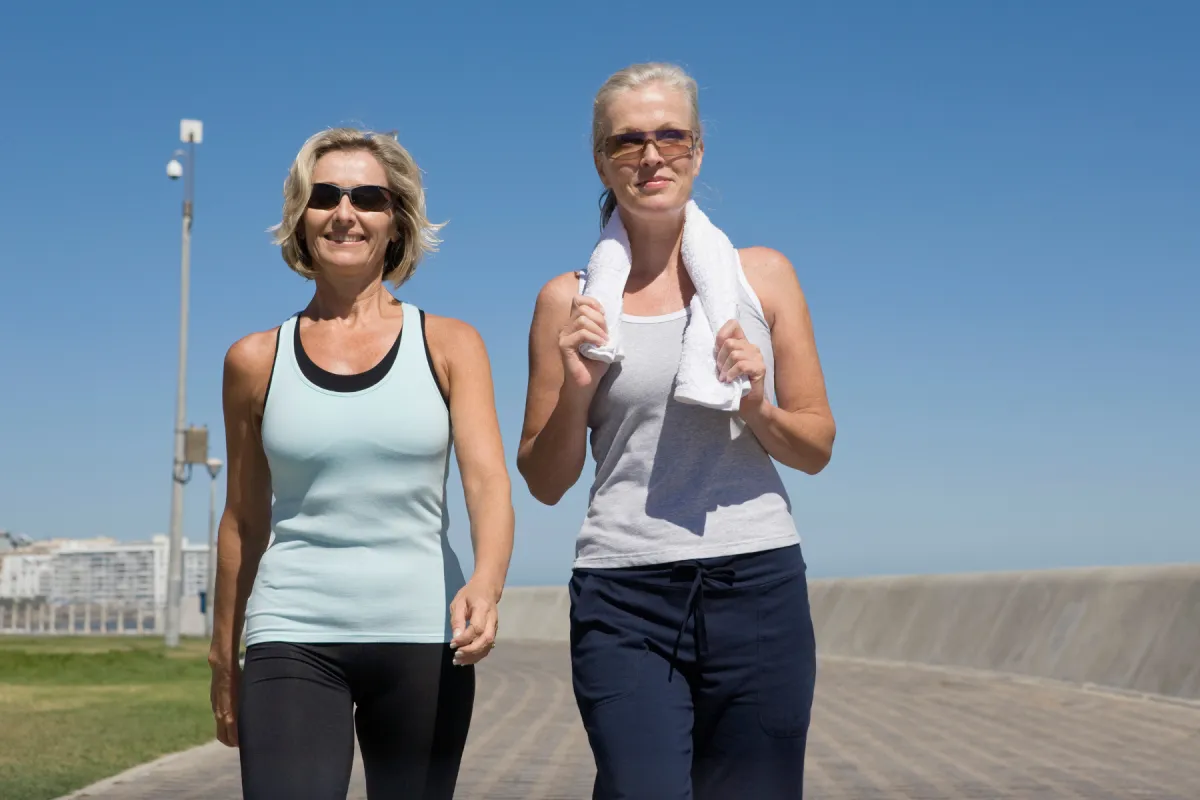
Today I saw two women walking.
Both were strong. Both were moving.
Both looked like they were quietly straining their bodies.
One wore a weighted vest. Her chest was pitched so far forward of her pelvis that her low back looked like it was doing all the work to keep her upright.
The other walked hinged at her hips, her upper body angled forward as if her spine had to brace with every step.
If I could have asked them one question, it would have been:
“How does your neck, low back and hips feel?”
Because here’s what most women don’t realize.
The Real Reason Posture Starts Causing Pain in Midlife
When your head, rib cage, and pelvis are not stacked well, your body has to compensate.
Research shows that forward-flexed and forward-head positions increase muscle demand and alter nervous system activity, forcing the body to work harder to maintain stability and balance.
(See research here: https://pubmed.ncbi.nlm.nih.gov/31955048/)
That extra strain doesn’t disappear.
It shows up as:
• Tight neck
• Achy low back
• Hip pain
• Knee discomfort
• Feeling “stiff” even if you walk daily
Your body is always trying to keep you upright and safe.
If your structure is off, something else pays the price.
Why Walking Alone Isn’t Enough After 50
Walking is wonderful.
But if your body doesn’t share load well, you’re reinforcing compensation patterns with every step.
Midlife changes three important things:
Muscle mass begins to decline.
Connective tissue becomes less resilient.
The nervous system becomes more stress-sensitive.
Without strength and structural support, your body defaults to bracing and overworking certain areas.
That’s when pain creeps in.
How to Reduce Aches and Build a Stronger, More Resilient Body
Here’s what actually works:
1. Improve Your Stack
Your head, ribs, and pelvis should work together — not fight each other. Small adjustments in alignment reduce unnecessary strain immediately.
2. Rehydrate and Calm the Fascia
I use The MELT Method® to gently rehydrate fascia and calm the nervous system. When the body feels safe, it stops gripping.
3. Build Strategic Strength
Strength training isn’t optional in midlife.
It protects joints.
Supports bones.
Improves blood sugar regulation.
And makes daily movement easier.
When muscle supports the system, load distributes evenly instead of dumping into your low back or knees.
4. Regulate the Nervous System
If your nervous system is constantly “on,” your body stays tight.
We reduce stress reactivity so your muscles can relax between effort.
What This Means for You
If you’re walking daily but still feeling:
• Tight
• Stiff
• Achy
• Slightly unstable
It’s not because you’re failing.
It’s because your body needs more support.
Inside Strong After 50 Collective, we work on exactly this:
• Building muscle safely
• Improving load sharing
• Calming the nervous system
• Reducing compensation patterns
• Increasing longevity and health span
So you don’t just move more.
You move better.
And when you move better, you hurt less.
If you want to stop reinforcing strain and start building a body that supports your next decade, this is where we begin.
If you’re ready to build strength, reduce aches, regulate your nervous system, and extend your health span in a way that actually fits this season of life, Strong After 50 Collective is where we do this work.
If you’d like the private video that explains how it works, message me “STRONG” at boundlessbalance.com/contact and I’ll send it to you personally.
About Maria
Maria helps women 50+ lose weight, build muscle, improve energy and sleep, and reduce aches and pains so they can live active, healthy lives long term. Her work focuses on building muscle safely and keeping blood sugar steady.
